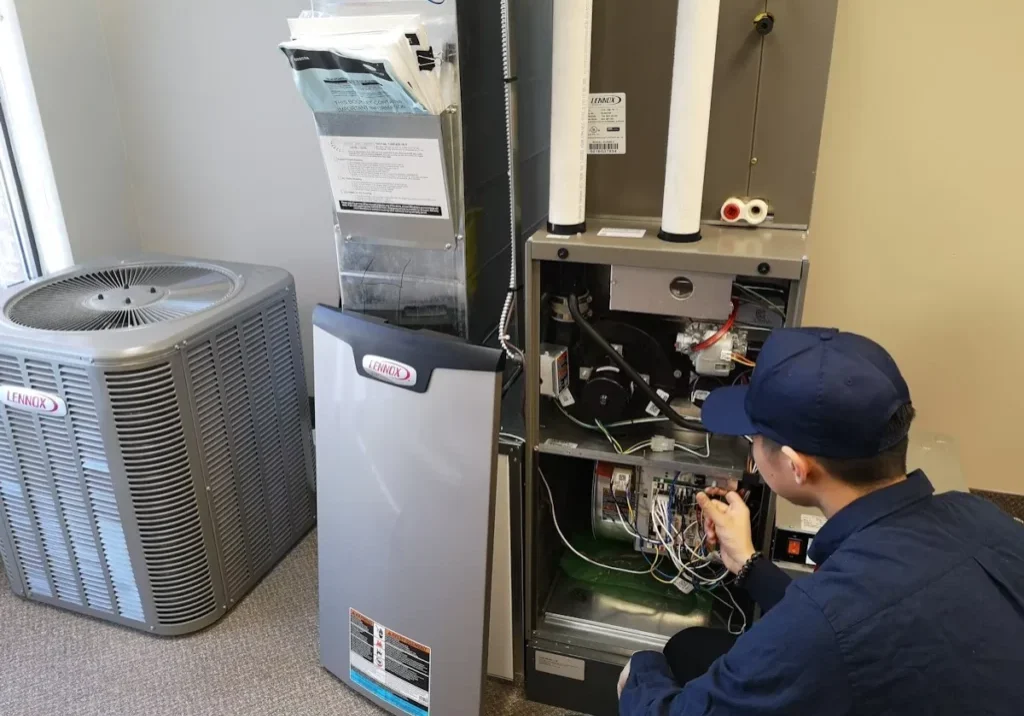
Short answer: A furnace tune-up should be done once a year, ideally before the heating season. A professional tune-up cleans critical parts, checks safety controls and combustion, verifies airflow, calibrates the thermostat, and tests the system under load so it runs safely, efficiently, and reliably all winter.
Why is yearly furnace maintenance worth it?
A furnace works hard every heating season. Dust on burners, a weak igniter, a sluggish blower, or a miscalibrated gas valve can all nudge performance in the wrong direction, causing higher bills, noisy starts, uneven rooms, or mid-winter shutdowns. An annual visit is preventative because it restores “like-new” operation, catches small problems early, and verifies that safety limits and carbon-monoxide protections are doing their job.
What does a professional furnace tune-up actually include?
A quality tune-up is more than a filter swap and a quick glance at the burners. Instead, it’s a systematic check from intake air to exhaust, with adjustments that move the needle on comfort and efficiency. While the exact steps vary by model and fuel type, a comprehensive visit typically covers:
The goal is to return the system to safe and efficient specs and document the results so you know what was done and why.
How do I know if my furnace needs service sooner than once a year?
Your system will usually tell you when there’s an issue. Watch for:
If any of these show up, get it checked. Small problems tend to become big ones during the first cold snap.
Will a furnace tune-up lower my energy bills?
Yes—when it’s done right. Clean burners and verified gas pressure improve combustion efficiency, restored airflow reduces run time, and calibrated thermostat and staging prevent overshooting your setpoint. You won’t see “magic” savings, but most homeowners notice steadier comfort and fewer hours of operation to reach the same temperature. That’s real money over a full season.
What’s the difference between repair and maintenance?
Maintenance is proactive. Repair is reactive. You can’t prevent every breakdown, but consistent maintenance dramatically lowers the odds and protects many manufacturer warranties that require documented service.
What does a safe furnace look like after service?
After a proper tune-up, the tech should be able to show you:
You should also receive a summary of findings, photos where helpful, and simple reminders.
How long does professional furnace maintenance take?
Most single-system furnace maintenance tune-ups wrap in 60–90 minutes, depending on the furnace type, access, and how dirty things are. If the tech discovers a part that’s clearly failing, expect a quick conversation about options before work proceeds.

How does airflow affect comfort and furnace life?
Too little airflow and the heat exchanger overheats, triggering safety shutdowns and stressing components. Too much airflow and the air may feel drafty while the furnace struggles to reach setpoint. Measuring static pressure and setting blower speeds correctly ensures heat transfers cleanly to the air stream and distributes evenly room-to-room.
Is “emergency heat” the same as a normal furnace cycle?
If you have a dual-fuel or heat-pump system, “emergency heat” typically forces the backup heat source to take over. It’s intended for equipment issues or extreme weather, not daily use. If you find yourself relying on it frequently, that’s a sign the primary system needs attention.
Can duct issues really make a serviced furnace feel underpowered?
Absolutely. Even a perfectly tuned furnace can’t overcome leaky or undersized ducts. Common culprits include undersized returns, pinched flex runs, or unsealed joints in attics and crawlspaces. A good maintenance visit includes a quick duct check because the best results blend clean combustion with healthy airflow pathways.
How should I think about furnace installation cost vs. maintenance?
Maintenance extends the usefulness of what you own and delays bigger spends. When faced with a large repair on an older unit, a pro will help you compare “repair now” vs. “replace” by discussing efficiency, parts availability, and your tolerance for risk. Maintenance keeps those conversations optional for as long as possible.
Will a tune-up help with indoor air quality?
Indirectly, yes. Clean burners and proper combustion reduce byproducts, verified venting manages moisture and exhaust, and correct airflow keeps filters working as intended. Pairing maintenance with the right filter strategy and addressing any duct leaks goes a long way toward cleaner air without overcomplicating your system.
What records should I keep after a tune-up?
Hang onto the service report, especially the measured values like temperature rise, static pressure, combustion/gas readings, and notes on safety controls. These benchmarks help future techs spot changes quickly and can support manufacturer warranty requirements.
What if my system seems fine? Should I still schedule maintenance?
That’s actually the perfect time. The absence of symptoms means a quick visit that keeps things that way. Waiting until you notice a problem tends to convert maintenance into repair and often at the least convenient time.
How do I get the most from my maintenance plan?
Look for a plan that bundles priority scheduling, seasonal reminders, and member savings on repairs or upgrades. The real win is consistency: same time every year, same thorough checklist, and the same clear communication about what’s healthy and what to watch.
When is the best time of year to book a tune-up?
Early fall is ideal, before the first sustained cold. Scheduling ahead avoids rush periods, gives you more appointment options, and ensures your furnace is tuned before it’s needed daily.
What should I expect on the day of service?
A respectful visit. The tech should arrive on time, protect work areas, walk you through the plan, and share findings as they go. When they leave, the system is tested under normal operation, thermostat settings are confirmed, and you know exactly what was done and why.
Bottom line: is annual furnace servicing really necessary?
Yes. It is a reliable way to keep your home comfortable, safe, and efficient. Annual service prevents premature wear, protects against unsafe conditions, and provides data you can use to make smart decisions down the road.
Ready for worry-free heat all season?
If you’ve been searching for trusted heating care, you’ve found it. Contact Balanced Comfort to schedule your furnace tune-up today, and ask about our Home Comfort Membership for priority scheduling, seasonal checkups, and member savings on future service and equipment. Real Solutions, Real Savings—and a balanced home you can feel.
A Balanced Home is a Happy Home!
We're here to keep your home running smoothly and feeling just right. No stress, no hassle. From heating and cooling to plumbing, you can count on us for reliable, friendly service every time.