Balanced Comfort

High-Efficiency Furnace Shutting Off: A Central Valley Repair
Quick Answer
If your high-efficiency furnace turns on and then quits partway through, one common cause is blocked condensate drainage. On a recent Central Valley job, dirt in the collector box and two of its channels kept water from draining, and cleaning it got the furnace running normally again. Even newer furnaces need these drain paths kept clear.
A newer furnace that kept quitting on its own
A Central Valley homeowner called us about a heater that seemed to struggle whenever it ran. Throughout the previous winter, the system would turn on, run for a while, and then stop. It didn't happen every time, which made it hard to pin down.
The furnace wasn't old. It was a Carrier split system installed in 2021, about four years old, with a 90% high-efficiency gas furnace in the attic. Many people assume equipment that new shouldn't have problems yet. This job is a good example of why that isn't always true.
What we found in the attic and how we fixed it
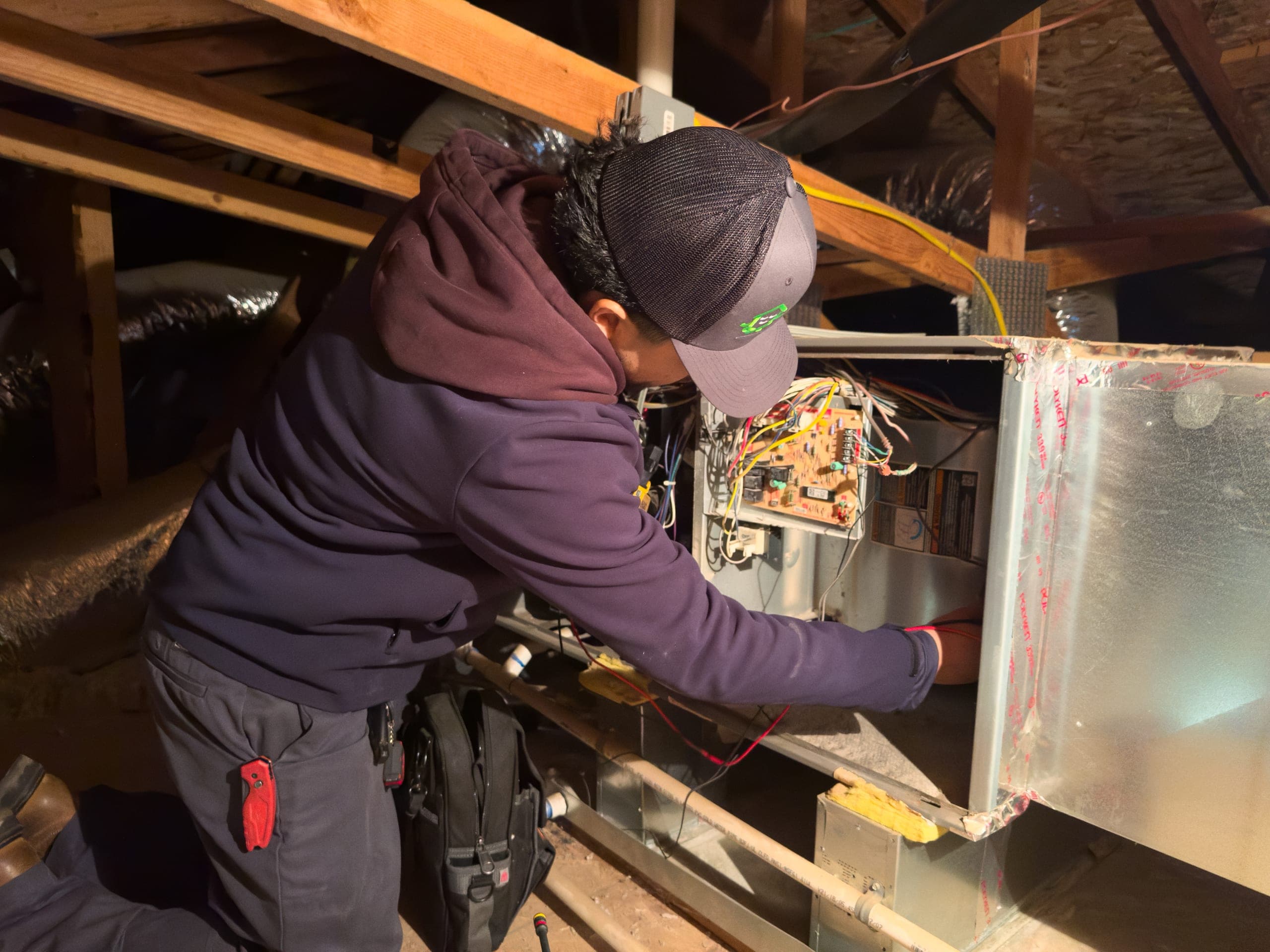
Our technician talked with the homeowner about how and when the shutdowns happened, then went up to the attic to inspect the system.
The cause turned out to be in the furnace's condensate collector box. Dirt had built up inside the box and in two of its channels. That buildup kept condensate, the water a high-efficiency furnace makes as it runs, from flowing out the way it should.
When water can't drain, it backs up inside the furnace. High-efficiency furnaces have safety controls that watch for this, and they'll stop the burners rather than keep running with a drainage problem. A partial blockage often causes exactly the on-again, off-again pattern this homeowner noticed: some cycles drain well enough to finish, others don't.
Here's what the repair involved:
- Removing the collector box from the furnace
- Cleaning the dirt out of the box and its channels so condensate could flow freely
- Reinstalling the collector box
- Running and testing the system to confirm it was operating properly
After the cleaning, everything was running. We explained to the homeowner that the clogged collector box was most likely why the furnace had been working only intermittently the winter before.
“Technician was excellent, courteous, clean, and explained things well. Highly recommend service!”
Verified Google Review
Why high-efficiency furnaces make water at all
A 90% furnace turns about 90% of its fuel into heat for your home. To get there, it pulls extra heat out of the exhaust gases using a second heat exchanger. As those gases cool, the water vapor in them condenses into liquid, much like water beading on a cold glass.
That water has to go somewhere. It collects in the collector box, travels through internal channels and tubing, passes through a trap, and then leaves through a drain line or a small condensate pump. Every piece of that path needs to stay open.
Older, standard-efficiency furnaces send hot exhaust straight up a flue, so they don't produce much condensate. That's why drainage problems are mostly a high-efficiency furnace issue, and why newer homes and recent replacements are more likely to run into them.
Over time, small amounts of dirt, debris, and residue can settle in the low spots of that drain path. The furnace keeps running fine until enough builds up to slow the water down. On this job, it took about four years for the buildup to cause noticeable trouble.
Warning signs your furnace drainage is struggling
Drainage problems tend to show up gradually. These are some signs worth paying attention to:
- The furnace starts, runs for a few minutes, then shuts off before the house warms up
- Heating works some days and not others, with no clear pattern
- Gurgling or sloshing sounds coming from the furnace
- Water around the furnace, in a drain pan, or stains on the ceiling below an attic unit
- A condensate pump that runs constantly, runs loudly, or doesn't seem to run at all
- A blinking light on the furnace control board that keeps showing the same code
Any one of these doesn't guarantee a clogged collector box, since other parts can cause similar symptoms. But they're good reasons to have the system looked at before the coldest weeks of the year.
What homeowners can safely check themselves
There are a few simple things you can look at before calling. Keep it to the outside of the equipment. The collector box, inducer, and burner areas are best left to a trained technician, since they're part of the combustion and venting system.
If your furnace is in the attic, be careful up there. Step only on joists or a walkway, use good lighting, and avoid the hottest part of the day.
- Replace a dirty air filter. It won't fix a drain clog, but it rules out an easy cause of short cycling.
- Look for water on or around the furnace, in the drain pan, or along the drain line.
- If you have a condensate pump, listen for it to run while the furnace is heating, and check whether its reservoir looks overfull.
- Look through the small window on the furnace door for a blinking light and write down the pattern. That code helps a technician narrow things down.
- Make sure the thermostat has fresh batteries and is set to heat.
If those all check out and the furnace still quits, the problem is likely inside the unit. That's a good time to schedule heating repair rather than keep resetting the system.
Keeping your furnace's drain path clear
The best way to avoid this kind of mid-winter shutdown is regular maintenance. During a heating tune-up, a technician can check the condensate trap, drain lines, and collector area, and clean them before buildup becomes a problem.
Fall is the ideal time, before you rely on the furnace every night. In the Central Valley, many homeowners pair a fall heating maintenance visit with a spring AC check so both seasons start off right.
If you'd rather not keep track of the schedule, our membership plan includes regular maintenance visits and reminders. It's an easy way to make sure a newer system gets the attention it needs, not just older equipment.
When to call a professional
If your furnace keeps starting and stopping, shows water where there shouldn't be any, or keeps flashing the same error code, it's time to have someone take a look. A drainage clog is a common, fixable cause, but similar symptoms can come from other parts, and a proper diagnosis keeps you from guessing.
Balanced Comfort serves Fresno, Clovis, Visalia, Madera and nearby towns. Call us at 559-234-4131, or book online at a time that works for you.
Frequently Asked Questions
Why would a furnace that's only a few years old need its drain cleaned?
High-efficiency furnaces produce water every time they run, and small amounts of dirt and residue can settle in the drain path over the years. Age doesn't prevent buildup, so newer systems still benefit from regular cleaning.
Is it safe to keep running a furnace that keeps shutting off?
The shutdown is usually the furnace protecting itself, so it isn't something to override or keep resetting. Turn it off if you see water leaking, and have it checked so the cause can be found and fixed.
Can I pour vinegar or bleach into my furnace drain to clear it?
It's best not to put cleaners into a furnace's internal drain path without knowing how your system is plumbed, since some parts aren't meant for it. A technician can clean the trap, lines, and collector box properly during a tune-up.
Ready to get it fixed?
Fresno’s friendly local team is one call away
Book online in about a minute or call us right now — we’ll take it from there.